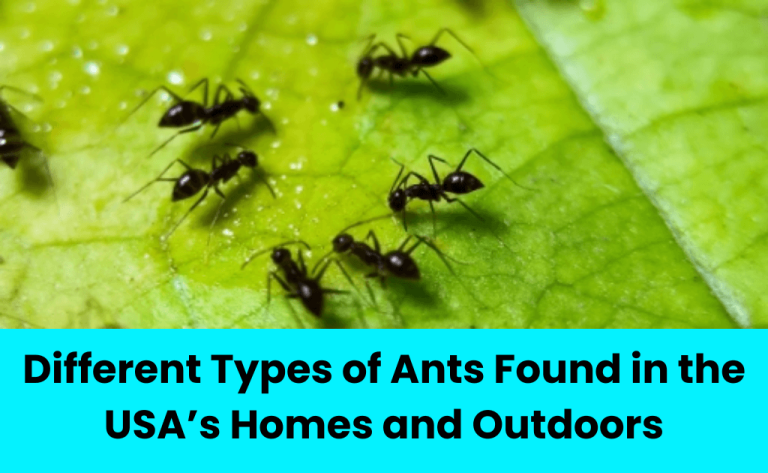
The USA is home to over 700 ant species, but only a handful regularly invade your home, yard, and property. Knowing the different types of ants you are dealing with is the first and most important step toward effective control.
Each ant species looks different, nests differently, and responds to different treatments. Using the wrong product on the wrong ant species makes the problem significantly worse.
This complete guide covers 20 of the most common ant species in the USA. You will learn how to identify each ant by size, color, behavior, and nesting habits so you can protect your home and family faster.
Common Types of Ants Found in the USA’s Indoors and Outdoors: All Species Identified
The USA is home to dozens of common ant species that invade homes, yards, and gardens. Below you will find every major indoor and outdoor ant species identified with appearance, habitat, lifecycle, and threat level.
Argentine Ants
Argentine ants are one of the most invasive ant species in the United States. Pest control experts consider them a serious threat to homes and ecosystems. They originally came from Argentina and Brazil. Today, they have spread across most of the southern USA.
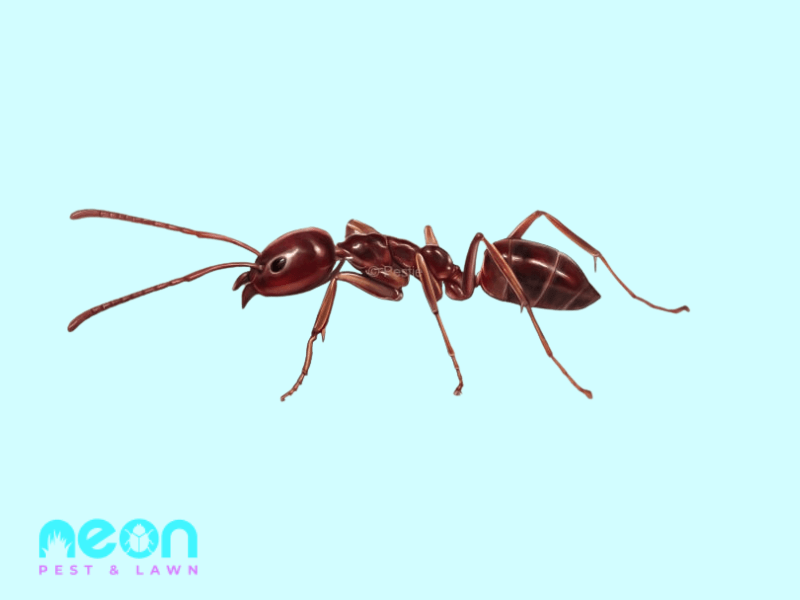
Appearance: Argentine ants measure about 2.2 to 2.8 mm long. They show a light to dark brown color. Workers look all the same size. They form long ant trails in kitchens and on walls.
Where Argentine ants are found: Argentine ants are common across the Gulf Coast states, California, and the Southeast USA. They thrive in urban and suburban neighborhoods. You can find them in kitchen walls, under floors, and inside insulation. They love moisture-rich environments near food sources. They often invade bathrooms, kitchens, and garden areas.
Habitat: Argentine ants build shallow nests in moist soil. They nest under rocks, wood piles, mulch, and concrete slabs. They prefer warm and humid climates. A single Argentine ant colony can hold tens of thousands of workers. Multiple colonies often merge, creating supercolonies that stretch for miles. This makes them extremely hard to control.
Lifecycle: Queens lay eggs continuously throughout the year in warm climates. Eggs hatch into larvae within 28 days. Larvae develop into pupae and then adult workers. The full lifecycle from egg to adult takes about 74 days. A single colony can have multiple queens, which speeds up colony growth. Workers live for several weeks, while queens live for several years.
Threat: Argentine ants do not sting humans. However, they bite when disturbed. Their biggest threat is contaminating food supplies inside your home. They aggressively drive out native ant species, damaging local ecosystems. They also protect plants from plant-damaging pests like aphids by harvesting their honeydew. This causes serious harm to gardens and crops. Large supercolonies make DIY ant control very difficult.
Carpenter Ants
Carpenter ants are among the most destructive types of ants in the USA. They do not eat wood like termites. Instead, they tunnel through wood to build their nests. This causes serious structural damage to homes over time.
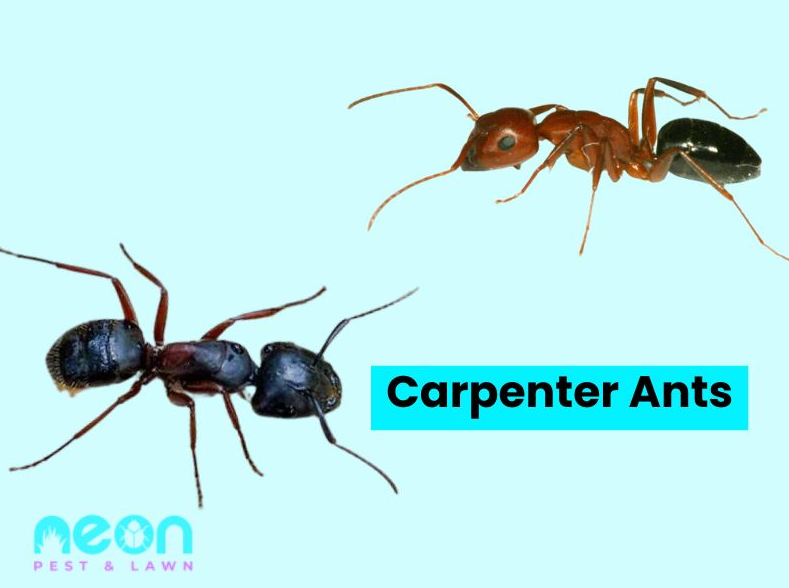
Appearance: Carpenter ants are large ants, measuring 1/4 to 1/2 inch long (6 to 13 mm). Queens can reach up to 5/8 inch (18 mm). They are usually black, red, or a combination of both colors. They have a smooth, rounded thorax and a single node at the waist. Their bodies have a circle of fine hairs at the tip of the abdomen. This feature helps identify carpenter ants from other large ant species.
Where Carpenter Ants Are Found: Carpenter ants live across the entire United States. They are most common in the Northeast, Pacific Northwest, and Midwest. Outdoors, they nest in dead trees, tree stumps, and rotting logs. Indoors, they target moisture-damaged wood in walls, roofs, and window frames. Kitchens and bathrooms are their favorite indoor nesting spots.
Habitat: Carpenter ants prefer moist or decaying wood for nesting. They create smooth, clean galleries inside wood. Unlike termites, they do not eat the wood. They push out wood shavings mixed with dead insects, called frass. Finding frass near wood surfaces is a key sign of a carpenter ant infestation. Colonies grow slowly and can take 3 to 6 years to reach full size.
Lifecycle: A carpenter ant colony starts when a mated queen finds a suitable wood location. She lays her first batch of eggs in spring. Eggs hatch into larvae within 24 days. The full egg-to-adult cycle takes about 60 days. A mature colony holds 3,000 to 10,000 workers. Carpenter ants produce winged swarmers called alates in spring. These swarmers leave to start new colonies.
Threat: Carpenter ants are a major structural threat to homes and buildings. They weaken wood beams, walls, and foundations over time. A large, mature colony can cause thousands of dollars in structural damage. They bite with strong jaws and spray formic acid into the wound. This causes a sharp burning feeling. Homeowners often mistake carpenter ant damage for termite damage. Always call a professional pest control expert for carpenter ant infestations.
Odorous House Ants
Odorous house ants are one of the most common household ant species in the United States. They get their name from the strong, rotten coconut smell they release when crushed. Pest experts also call them stink ants or coconut ants. They are small but extremely persistent home invaders.
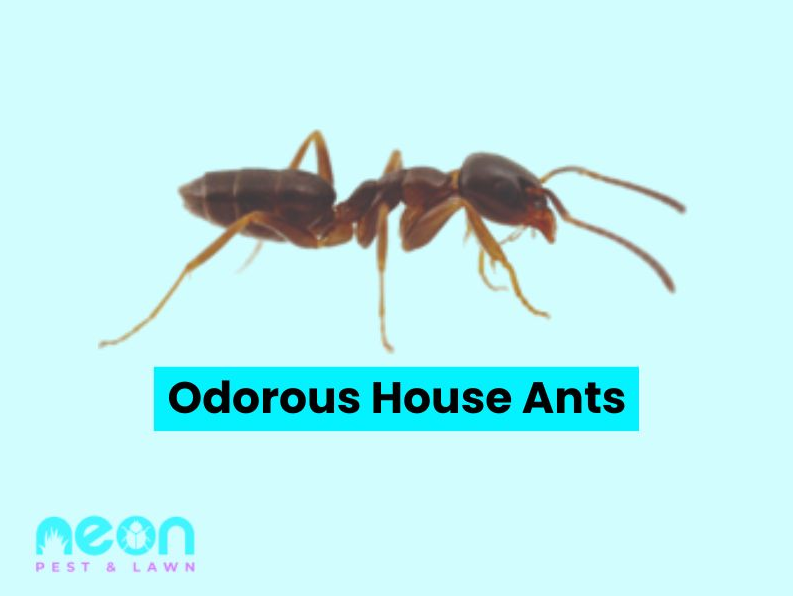
Appearance: Odorous house ants have a dark brown to black body. Workers measure about 1/16 to 1/8 inch long (1.5 to 3.2 mm). They have an uneven thorax when viewed from the side. They have a hidden single node covered by their abdomen. This makes them look like they have no node at all, which helps with identification. When crushed, they release a strong smell similar to rotten coconuts or blue cheese.
Where Odorous House Ants Are Found: Odorous house ants live throughout the entire United States. They are one of the top three most reported ant species by American homeowners. They commonly invade kitchens, bathrooms, and pantries. They enter homes through cracks in walls, gaps in windows, and utility pipes. They are especially active after rainfall when their outdoor nests flood.
Habitat: Odorous house ants nest in a wide variety of locations. Outdoors, they nest under rocks, wood piles, mulch, and in exposed soil. Indoors, they nest inside wall voids, under floors, and near water pipes. They prefer moist environments close to food sources. Colonies range from 100 to 100,000 workers with multiple queens. Their colonies spread quickly through a budding process.
Lifecycle: Queens lay eggs year-round in warm indoor environments. The egg-to-adult cycle takes about 34 to 38 days, depending on temperature. A single colony can have up to 8 queens. Workers live for several months. Queens can live for several years. Colonies grow rapidly and split into new satellite colonies often. This makes odorous house ant infestations hard to eliminate.
Threat: Odorous house ants do not bite or sting. Their main threat is contaminating food and kitchen surfaces. They trail across countertops, pantry shelves, and food packages. They are attracted to sweets, meats, and greasy foods. Their multiple-queen colonies make them very resistant to common ant baits. Standard store-bought sprays often cause colonies to scatter and spread further. A pest professional can provide more effective treatment options.
Pavement Ants
Pavement ants are one of the most recognizable common ant species in the USA. They get their name because they build nests under pavement, sidewalks, and driveways. You can often spot the small dirt mounds they push up between cracks in concrete. They are originally from Europe and arrived in the USA in the 1800s.
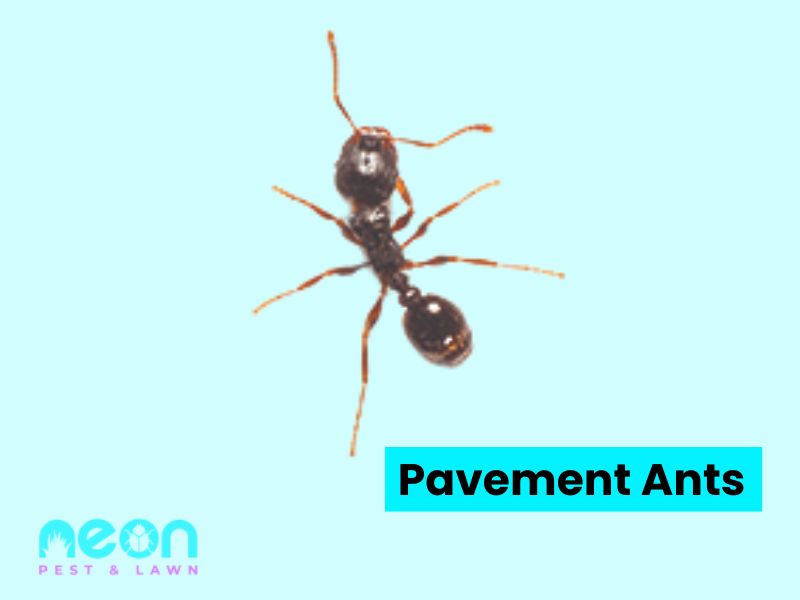
Appearance: Pavement ants have a dark brown to black body. Workers measure about 1/8 inch long (2.5 to 3 mm). Queens measure about 3/8 inch long (8 mm). They have parallel lines or grooves on their head and thorax. This feature helps identify them from similar species. They have two nodes at the waist and a small stinger. Their legs are slightly lighter than the rest of their body.
Where Pavement Ants Are Found: Pavement ants are common across most of the United States. They are especially widespread in the Midwest, Northeast, and Mid-Atlantic states. They live near sidewalks, driveways, parking lots, and building foundations. They invade homes through foundation cracks and gaps under doors. Kitchens, basements, and ground-floor rooms are their most common indoor targets.
Habitat: Pavement ants nest under and alongside pavement and concrete. They also nest under rocks, logs, and in soil near building foundations. Indoors, they nest inside walls, under floors, and in insulation. A typical pavement ant colony holds 3,000 to 5,000 workers with one queen. They are highly territorial and often battle neighboring colonies on sidewalks and driveways.
Lifecycle: Pavement ant queens begin laying eggs in early spring. The egg-to-adult cycle takes about 40 to 60 days. New queens and male swarmers appear in late spring and early summer. They swarm to mate and start new colonies. A mature colony takes 3 to 4 years to produce its first reproductive swarmers. Workers live for about 5 years, and queens can live much longer.
Threat: Pavement ants can sting and bite, but their sting is very mild for most people. Their main threat is invading homes and contaminating food. They eat almost anything, including grease, seeds, insects, and sweet foods. They are particularly attracted to greasy and protein-rich foods. Finding pavement ants indoors usually signals a nearby nest under your foundation. Large infestations require professional pest management to fully eliminate.
Red Imported Fire Ants
Red imported fire ants are one of the most dangerous ant species in the United States. They are aggressive, territorial, and deliver a painful, burning sting. The USA spends over $6 billion annually managing fire ant damage and medical costs. They originally came from South America and arrived in the USA in the 1930s.
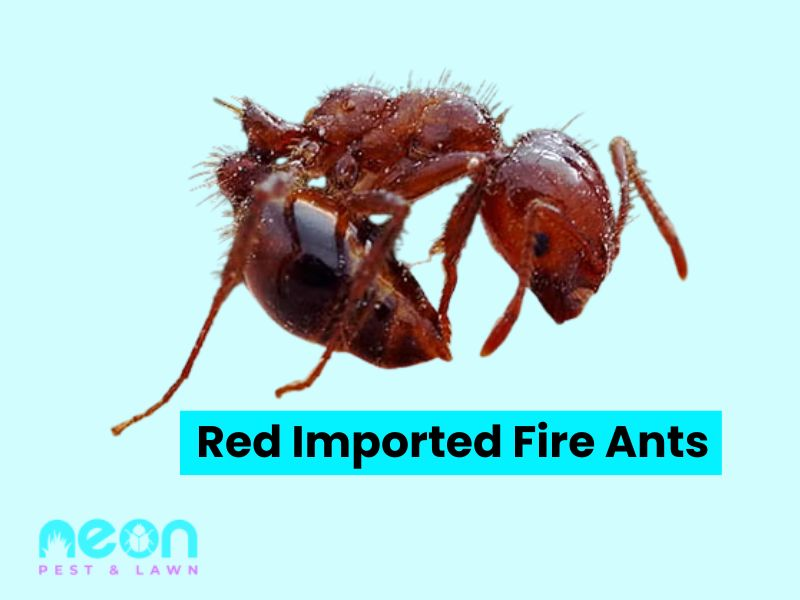
Appearance: Red imported fire ants have a reddish-brown to reddish-black body. Workers range in size from 1/16 to 1/4 inch long (1.6 to 6 mm). A single colony contains workers of multiple sizes called polymorphic workers. They have two nodes at the waist and a visible stinger. Their head is slightly darker than their thorax. Fire ant mounds have no visible entrance hole on top, which helps identify them.
Where Red Imported Fire Ants Are Found: Red imported fire ants are common across 15 southern US states. They are most widespread in Texas, Florida, Georgia, Alabama, and South Carolina. They thrive in warm, sunny climates with mild winters. They build mounds in open grassy areas, lawns, parks, and roadsides. They also invade electrical equipment, HVAC units, and home foundations.
Habitat: Fire ants build large dome-shaped mounds in open soil. Mounds can reach 18 inches high and 24 inches wide. Underground tunnels can extend 5 feet deep into the ground. A mature fire ant colony holds 100,000 to 500,000 workers. They prefer sunny, warm, and moist soil. After heavy rain, fire ants form floating rafts to survive flooding. This survival behavior makes them extremely resilient.
Lifecycle: A mated queen starts a new colony alone underground. She lays her first eggs within 24 hours of mating. The egg-to-adult cycle takes about 30 days. A mature queen lays up to 1,500 eggs per day. A mature colony can produce swarmers multiple times per year in warm climates. Workers live for 4 to 6 weeks. Queens live for 6 to 7 years.
Threat: Red imported fire ants are a serious health and safety threat. Their stings cause an immediate burning sensation followed by white fluid-filled pustules. About 2% of people develop severe allergic reactions, including anaphylaxis. Fire ants kill small animals and ground-nesting birds. They damage crops, electrical systems, and HVAC equipment, costing millions annually. Never disturb a fire ant mound without professional protective equipment. Always contact a licensed pest control professional for fire ant removal.
Acrobat Ants
Acrobat ants get their name from a unique defense behavior. They raise their abdomen above their head and thorax when threatened. This acrobatic pose makes them easy to identify. They are a common ant species found throughout the United States.
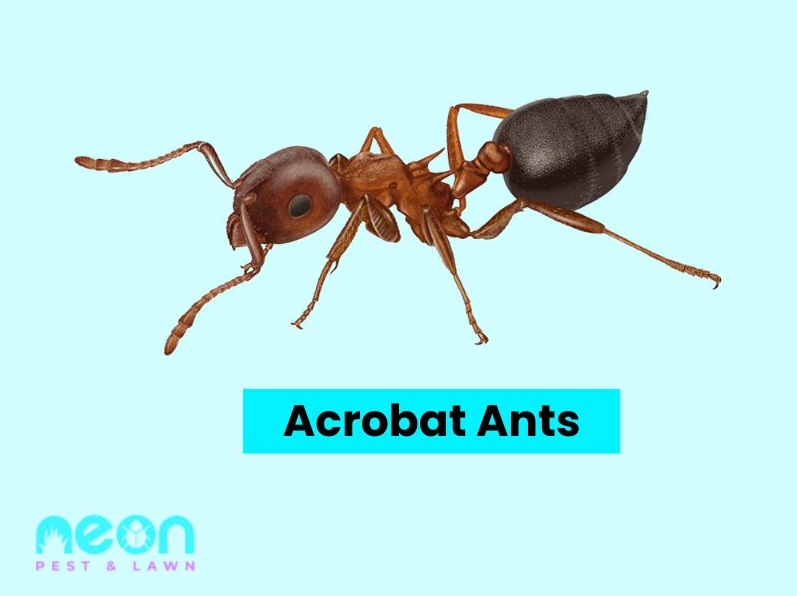
Appearance: Acrobat ants have a light brown to black body. Workers measure about 1/16 to 1/8 inch long (2 to 4 mm). Their heart-shaped abdomen is their most distinctive feature. They have two nodes at the waist. They also have a small stinger. When disturbed, they emit a foul-smelling chemical to deter predators. Some acrobat ant species show two-toned coloring with a darker abdomen.
Where Acrobat Ants Are Found: Acrobat ants are common across the continental United States. They live in wooded areas, gardens, and suburban neighborhoods. They enter homes through gaps in exterior walls, utility pipes, and damaged wood. They are commonly found near foam insulation, window frames, and door frames. Areas previously damaged by moisture or carpenter ants are especially at risk.
Habitat: Acrobat ants prefer moist or previously damaged wood for nesting. Outdoors, they nest inside dead trees, rotting logs, and tree branches. Indoors, they nest inside foam insulation, wall voids, and wood damaged by moisture. They often reuse old termite or carpenter ant galleries. A typical acrobat ant colony holds 3,000 or more workers with one queen.
Lifecycle: Acrobat ant queens lay eggs in spring and summer. The egg-to-adult cycle takes about 60 days. Colonies produce winged swarmers in late summer. These swarmers mate and start new colonies. A single queen leads each colony. Workers live for several months. Queens live for several years. Colony growth is slow compared to other ant species.
Threat: Acrobat ants bite when disturbed. The bite can cause mild skin irritation. Their bigger concern is structural damage to insulation and wood. They remove insulation foam to build their nests. They also chew through electrical wire insulation, creating a fire hazard. Seeing acrobat ants indoors often signals existing moisture damage in your walls. A pest professional can locate the nest and fix the root moisture problem.
Army Ants
Army ants are one of the most fascinating and feared ant species in the insect world. They do not build permanent nests. Instead, they form living bivouacs using their own bodies. They are nomadic hunters that travel in massive raiding columns.
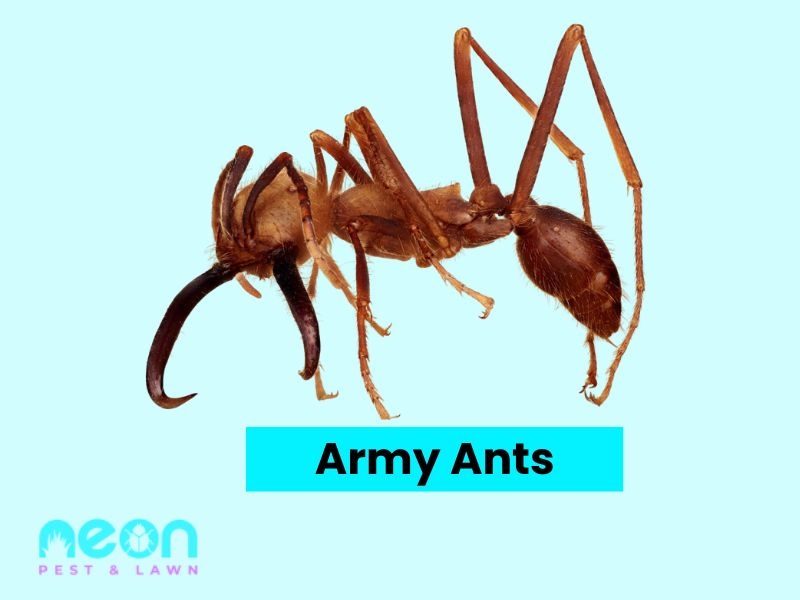
Appearance: Army ants in the USA measure about 1/8 to 1/2 inch long (3 to 12 mm). Soldiers are larger with long, curved mandibles built for defense. Workers are smaller and darker. They have a reddish-brown to black body. Army ants have poor eyesight and navigate using chemical trails called pheromones. Their large mandibles are powerful enough to pierce human skin.
Where Army Ants Are Found: Army ants in the USA are most common in Texas, Arizona, and other southwestern states. The Neivamyrmex species is the most commonly encountered US army ant. They live in forests, grasslands, and wooded suburban areas. They rarely invade homes but can enter ground-floor areas during their nomadic movements. Sightings spike in late spring and summer.
Habitat: Army ants do not build traditional underground nests. Instead, they form temporary bivouacs made of their own linked bodies. These living nests can contain 100,000 to 700,000 workers. They move to a new location every few days during raiding phases. During the stationary phase, the queen lays thousands of eggs. Colonies alternate between these two phases continuously.
Lifecycle: Army ant colonies operate in two distinct phases. During the nomadic phase, they travel and raid daily. During the stationary phase, the queen lays 100,000 to 300,000 eggs in one week. Eggs develop into larvae within 10 to 14 days. The full colony cycle repeats approximately every 35 days. A single colony can contain up to 700,000 workers during peak phases.
Threat: Army ants are not a typical household threat in the USA. However, their massive raiding columns kill insects, small animals, and ground-nesting birds. Soldiers deliver painful bites with their large mandibles. They can overwhelm and kill small pets if encountered outdoors. Their primary ecological role is controlling populations of other insects and invertebrates. Contact a pest expert if you spot large army ant columns near your home.
Citronella Ants
Citronella ants get their name from the strong lemon or citronella smell they release when threatened. This smell comes from a defensive chemical in their body. They are also called yellow ants or moisture ants in some regions of the USA.
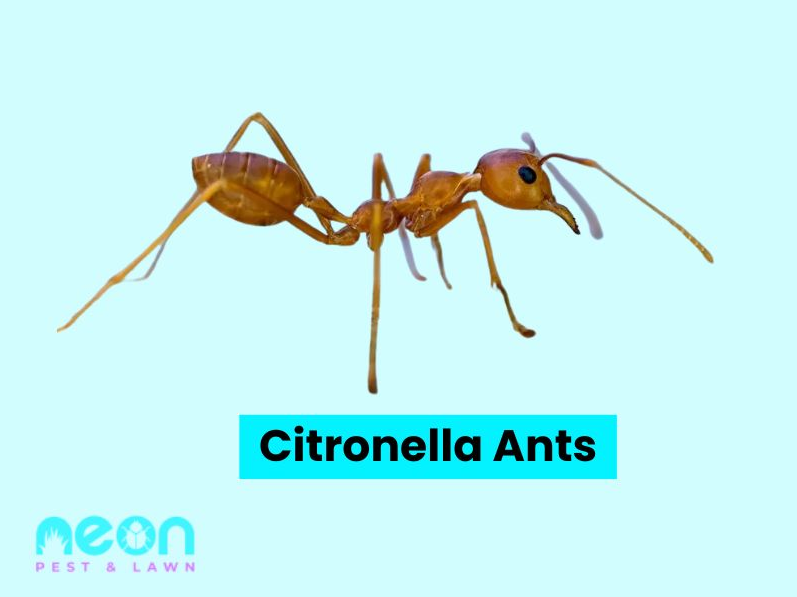
Appearance: Citronella ants have a yellow to yellowish-brown body. Workers measure about 1/8 to 3/8 inch long (4 to 8 mm). Queens are significantly larger. Their body appears smooth and somewhat shiny. They have one node at the waist. Their most distinctive feature is the strong citrus-like odor released when crushed. Winged swarmers are often mistaken for termite swarmers due to their similar size and color.
Where Citronella Ants Are Found: Citronella ants are common throughout the eastern and central United States. They are widespread in New England, the Mid-Atlantic states, and the Midwest. They live in gardens, lawns, wooded areas, and near building foundations. They rarely forage openly on surfaces. Most homeowners discover them only when swarmers appear indoors in late summer or fall.
Habitat: Citronella ants are subterranean nesters. They build deep nests in moist soil, under concrete slabs, and near foundations. They feed on honeydew produced by underground aphids and mealybugs. They rarely enter homes to forage for food. Homeowners usually notice them when winged swarmers emerge from wall voids or basement floors during the mating season.
Lifecycle: Citronella ants produce winged swarmers once per year. Swarming happens in late summer through early fall. Swarmers mate during flight, and then queens start new colonies underground. The egg-to-adult cycle takes several weeks, depending on temperature. Colonies grow slowly and can remain undetected underground for many years. A mature colony can hold thousands of workers.
Threat: Citronella ants are not a dangerous ant species. They do not bite or sting humans effectively. They do not damage wood or food supplies. Their biggest nuisance is winged swarmers emerging inside homes, which alarms many homeowners. These swarmers do not represent a serious infestation. However, their presence indicates a large underground colony near your foundation. A pest expert can locate and treat the colony to prevent future swarming.
Little Black Ants
Little black ants are one of the smallest and most common ant species in the USA. Despite their tiny size, they form large, well-organized colonies. They are a frequent kitchen invader and one of the top complaints from American homeowners.
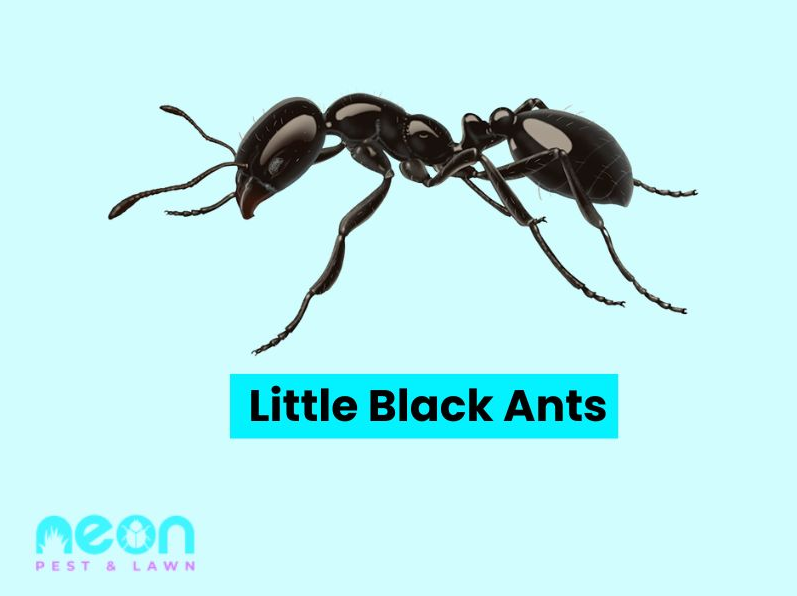
Appearance: Little black ants have a jet black body. Workers measure only about 1/16 inch long (1.5 mm). Queens measure about 1/8 inch long (4 mm). They have two nodes at the waist and a small, rarely used stinger. Their body is shiny and hairless. Their extremely small size makes them easy to overlook until a full trail appears.
Where Little Black Ants Are Found: Little black ants are found throughout the entire United States. They are especially common in the eastern half of the country. They invade kitchens, bathrooms, and pantry areas in homes. They enter buildings through tiny cracks, gaps around pipes, and openings in walls. Outdoors, they appear in yards, gardens, and along sidewalks.
Habitat: Little black ants nest in rotting wood, soil, and under rocks and debris outdoors. Indoors, they nest in wall voids, decaying wood, and behind brick or masonry. They prefer dark, sheltered nesting sites. A typical little black ant colony contains 1,500 to 2,000 workers with two queens. They are opportunistic feeders and consume both sweet and protein-rich foods.
Lifecycle: Little black ant queens lay eggs in spring and early summer. The egg-to-adult development takes about 10 days for eggs and around 28 days total. Colonies produce winged swarmers in June through August. Swarmers mate in flight and start new colonies. Workers live for several months. Queens live for several years and continuously expand the colony.
Threat: Little black ants do not pose a major health threat to humans. Their sting is too weak to cause pain. Their main issue is food contamination in kitchens and pantries. They contaminate sugar, cereal, bread, and other pantry staples. They also cause concern when trails appear across countertops and food prep areas. Standard ant baits are usually effective but require patience and correct placement to fully eliminate the colony.
Moisture Ants
Moisture ants are a common name for several yellow ant species that thrive in damp environments. They are strong indicators of water damage or moisture problems in your home. Finding moisture ants indoors is a serious warning sign that requires immediate attention.
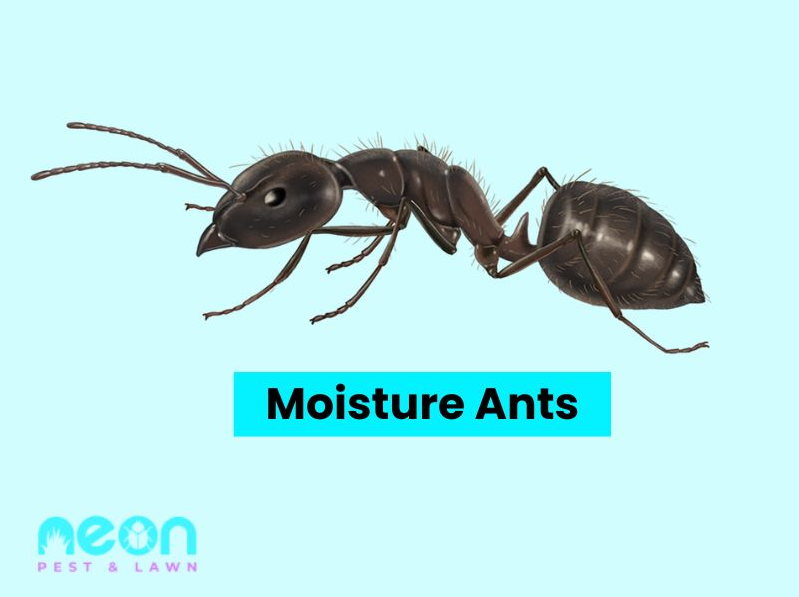
Appearance: Moisture ants have a yellow to brownish-yellow body. Workers measure about 4 to 4.5 mm long. They have one node at the waist. Like citronella ants, some moisture ant species emit a lemon-like smell when crushed. Winged swarmers are common in late summer. Their yellow coloring makes them stand out against darker wood surfaces.
Where Moisture Ants Are Found: Moisture ants are most common in the Pacific Northwest, including Washington, Oregon, and northern California. They also appear in parts of the Midwest and Northeast USA. They live in rotting logs, damp soil, and wet wood structures. Indoors, they target water-damaged wood in bathrooms, kitchens, basements, and roof areas.
Habitat: Moisture ants require high-moisture environments to survive and nest. They nest inside water-damaged wood, rotting timber, and wet structural beams. Unlike carpenter ants, they actually eat decayed wood material. Their presence signals active water damage or leaks somewhere in the structure. They often infest subflooring, window sills, and areas near leaky pipes.
Lifecycle: Moisture ants colonies grow slowly in cool, moist environments. Queens lay eggs throughout spring and summer. The egg-to-adult development cycle takes several weeks. Colonies produce winged swarmers in late summer. A mature moisture ant colony holds several thousand workers. The colony grows larger as wood decay expands within the structure they inhabit.
Threat: Moisture ants are a serious structural warning sign. They do not cause primary structural damage like termites. However, their presence confirms active wood rot and water damage in your home. Ignoring moisture ants leads to expensive structural repairs. They can also attract other wood-destroying pests to already weakened areas. Always fix the water source first, then treat the colony. Call a pest control and home repair professional together for the best outcome.
Pharaoh Ants
Pharaoh ants are considered one of the most difficult ant species to control in the world. They are a major pest in hospitals, restaurants, and apartment buildings across the USA. Their ability to spread dangerous bacteria makes them a serious public health concern.
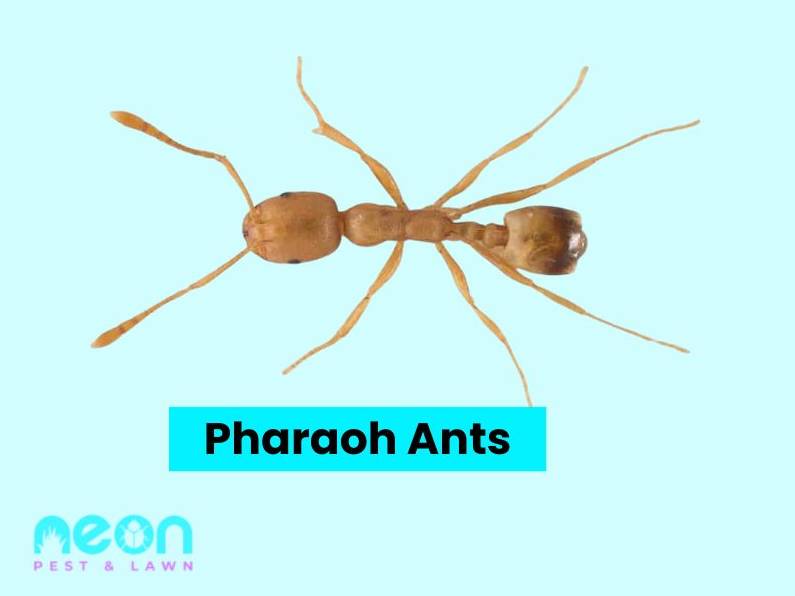
Appearance: Pharaoh ants have a pale yellow to light orange body. Their abdomen is slightly darker, appearing brown or black at the tip. Workers measure about 1/16 inch long (2 mm). They have two nodes at the waist. Queens are larger, measuring about 1/8 inch (4 mm). Their tiny size and light color make them very difficult to spot on light-colored surfaces.
Where Pharaoh Ants Are Found: Pharaoh ants are found throughout the entire United States. They thrive in warm, heated buildings and rarely survive outdoors in cold climates. They are most problematic in hospitals, nursing homes, hotels, grocery stores, and apartment complexes. Inside homes, they target kitchens, bathrooms, and areas near water sources. They travel through electrical conduits and plumbing pipes inside walls.
Habitat: Pharaoh ants nest in warm, hidden locations inside buildings. They nest inside wall voids, under floors, behind baseboards, and inside electrical outlets. They require warmth and moisture to thrive. A pharaoh ant colony can hold 10,000 to 300,000 workers with hundreds of queens. They do not swarm to reproduce. Instead, they bud into new colonies when disturbed, making improper treatment very dangerous.
Lifecycle: Pharaoh ant queens lay 10 to 12 eggs per batch throughout the year. The egg-to-adult cycle takes about 45 days at room temperature. A colony can have hundreds of reproductive queens at one time. New colonies form through budding, not swarming. A single colony can split into dozens of satellite colonies if disturbed incorrectly. Workers live for 10 weeks. Queens live for 4 to 12 months.
Threat: Pharaoh ants are a serious public health threat. They carry and spread dangerous bacteria, including Salmonella, Streptococcus, and Staphylococcus. In hospitals, they invade wounds, IV bags, and sterile equipment. Using repellent sprays on pharaoh ants causes colony budding, making the infestation much worse. Only professional ant baiting programs effectively control pharaoh ants. Never use spray insecticides on a pharaoh ant infestation.
Sugar Ants
Sugar ants are a common name used for several small ant species that invade homes in search of sweet foods. In the USA, the term most often refers to odorous house ants, pavement ants, or little black ants. True sugar ants are actually native to Australia, but the name applies broadly to sweet-seeking ants in American homes.
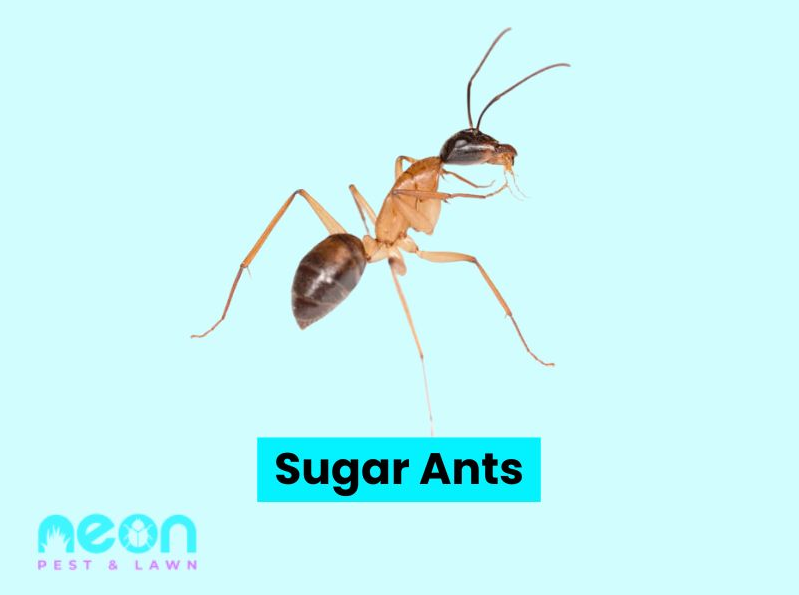
Appearance: Sugar ants in the USA vary by species. Most measure between 1/16 and 1/8 inch long (2 to 3 mm). They are commonly black, dark brown, or brownish-orange. The banded sugar ant has distinctive orange and black banding on its body. Most sugar ant species have two nodes at the waist. Their small size helps them enter tiny cracks and gaps in walls and floors.
Where Sugar Ants Are Found: Sugar ants appear throughout the entire United States. They are most active in the spring and summer months. They invade kitchens, pantries, and dining areas in search of food. They enter homes through gaps in window screens, cracks in walls, and openings around pipes. Trails often lead from outdoor nests through walls into kitchens and food storage areas.
Habitat: Sugar ants nest in soil, under rocks, in tree hollows, and inside wall voids. They prefer sheltered, quiet nesting spots close to food sources. Outdoors, they are active primarily at dusk and nighttime. Indoors, they stay active year-round in heated homes. Colony sizes vary by species but typically range from a few thousand to tens of thousands of workers.
Lifecycle: Sugar ant queens lay eggs in spring through midsummer. The egg-to-adult cycle takes about 8 to 10 weeks. Colonies produce winged swarmers that mate and form new colonies. Swarmers appear most often in spring and early summer. Workers live for a few months, while queens live for several years. Colony growth is steady throughout warm months.
Threat: Sugar ants do not deliver dangerous stings or bites. Their primary threat is contaminating food supplies throughout your home. They target honey, syrup, fruit, candy, baked goods, and sugary drinks. Large trails across countertops indicate a nearby significant colony. Good food storage hygiene and sealing entry points are the most effective prevention methods. A pest professional can locate the colony and apply targeted ant bait treatments.
Texas Leaf-Cutter Ants
Texas leaf-cutter ants are among the most distinctive ant species in the United States. They are famous for cutting leaves and carrying them back to their nest. However, they do not eat the leaves. Instead, they use leaf pieces to grow a fungus that feeds the entire colony.
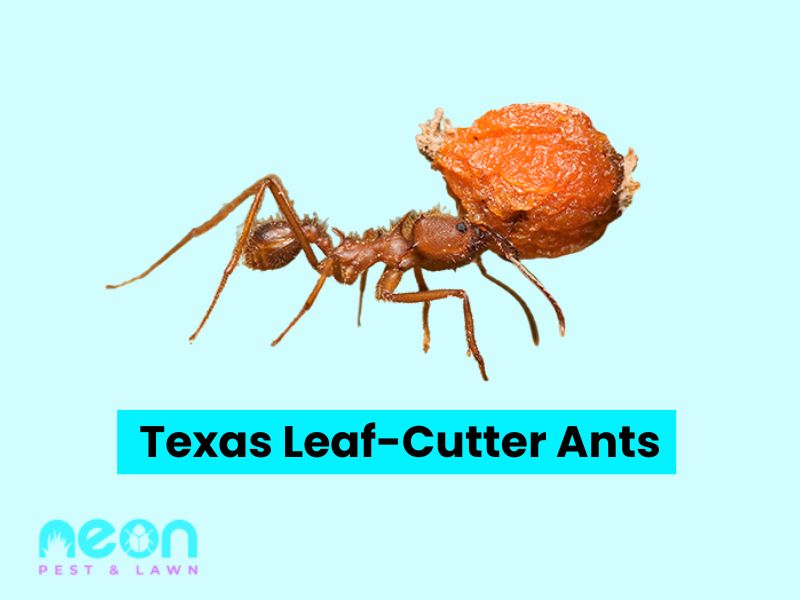
Appearance: Texas leaf-cutter ants range in size from 1/16 to 1/2 inch long (2 to 13 mm). The colony contains four distinct worker castes, each with a different size and job. They have a reddish-brown body with a rough, spiny thorax. Three pairs of prominent spines sit on their back. Their large mandibles allow them to cut through leaves efficiently. Queens are much larger, reaching up to 3/4 inch long (20 mm).
Where Texas Leaf-Cutter Ants Are Found: Texas leaf-cutter ants live primarily in Texas, Louisiana, and parts of the southern USA. They are most common in central and eastern Texas. They thrive in grasslands, forests, and suburban gardens. They create highly visible foraging trails up to 600 feet long through vegetation. They are known to defoliate entire trees and shrubs in a single night.
Habitat: Texas leaf-cutter ants build massive underground colonies. Their nests can reach 20 feet deep and span up to 25 feet wide. A mature colony can contain 1 to 8 million workers. They build hundreds of chambers underground to grow their fungal gardens. The nest entrance mounds are large and visible, often measuring several feet across. Their colonies can live for 10 to 20 years.
Lifecycle: A new colony starts when a mated queen burrows underground alone. She carries fungal spores in a special pouch in her mouth. She uses these spores to start the first fungal garden. The colony grows slowly for the first 3 to 4 years. Mature colonies produce winged swarmers once per year, usually after spring rains. A mature colony can hold millions of workers across multiple castes.
Threat: Texas leaf-cutter ants are a major agricultural and garden pest. A single colony can strip a full-sized tree overnight. They damage lawns, gardens, crops, and ornamental plants. They are not dangerous to humans but will bite if disturbed. Their bites are painful due to their strong mandibles. Controlling leaf-cutter ants requires professional-grade baits and treatments. Store-bought products rarely penetrate their deep underground colonies effectively.
Twig Ants
Twig ants are a slender and distinctive ant species found in the USA. They are also called elongate twig ants due to their narrow, stretched body shape. They spend most of their lives living and nesting inside hollow twigs and stems.
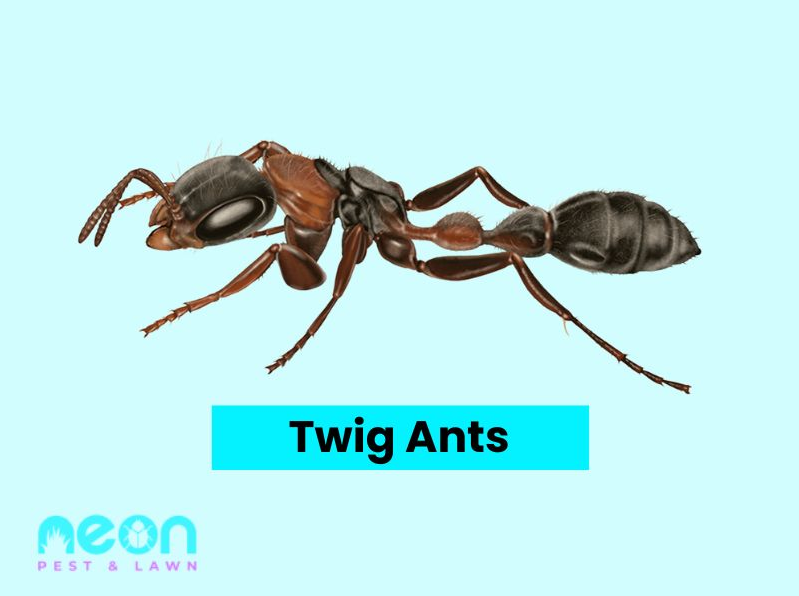
Appearance: Twig ants have a slender, elongated body that sets them apart from most other ant species. Workers measure about 1/4 to 3/8 inch long (7 to 10 mm). They have a reddish-orange head and thorax with a black abdomen. Their legs are long and thin. They have large eyes relative to their head size. They move quickly and erratically, similar to crazy ants.
Where Twig Ants Are Found: Twig ants are common in the eastern and southeastern United States. They are widespread from New England south to Florida and west to Texas and Oklahoma. They live in wooded areas, gardens, and shrubby landscapes. They rarely invade homes but may enter through open doors and windows. They are commonly found foraging on trees, shrubs, and fences.
Habitat: Twig ants are arboreal nesters, meaning they nest above ground. They build nests inside hollow twigs, dead branches, and plant stems. A twig ant colony is relatively small, holding only a few hundred workers. They prefer live trees and large shrubs with plenty of dead twigs available. They are predatory ants that actively hunt insects and small invertebrates on plant surfaces.
Lifecycle: Twig ant queens start colonies inside a single hollow twig. The colony grows slowly as the queen lays eggs in small batches. The egg-to-adult cycle takes several weeks. Colonies remain small compared to soil-nesting species. Twig ants produce winged swarmers in the summer months. New queens find new twigs and start independent small colonies. Workers are active year-round in warm climates.
Threat: Twig ants deliver a surprisingly painful sting for their size. They sting repeatedly without losing their stinger. Their sting can cause localized pain, swelling, and redness for several hours. They are not a household pest and rarely infest homes. Their main nuisance is stinging gardeners and landscapers who disturb their nesting twigs. Always wear gloves when pruning trees and shrubs in areas where twig ants are common.
Thief Ants
Thief ants get their name from their unique habit of nesting next to larger ant colonies and stealing their food and larvae. They are one of the smallest ant species in the USA. Their tiny size allows them to sneak through the tunnels of neighboring ant colonies undetected.
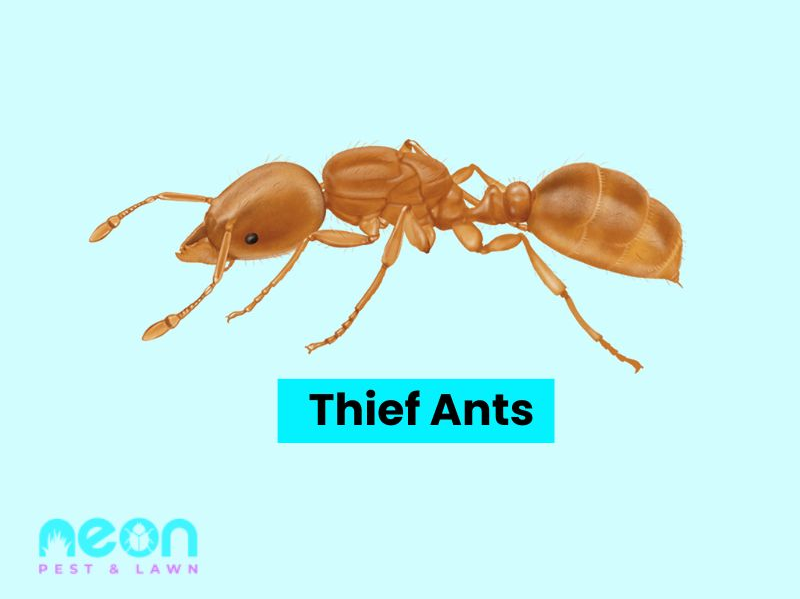
Appearance: Thief ants have a yellow to light brown body. Workers measure only about 1/32 to 1/16 inch long (1 to 1.5 mm). Queens measure about 1/4 inch long (6 mm). They have two nodes at the waist and a small stinger. Their extremely small size makes them very easy to confuse with pharaoh ants. Key differences include their smaller size and darker color compared to pharaoh ants.
Where Thief Ants Are Found: Thief ants are found throughout the entire United States. They are most common in the Midwest and eastern USA. They live in soil, under rocks, in decaying wood, and inside wall voids. Indoors, they target kitchens, pantries, and food storage areas. They enter homes through tiny cracks and gaps that larger ant species cannot access.
Habitat: Thief ants nest in soil, rotting wood, and under stones. They often build their nests directly adjacent to the nests of larger ant species. They use narrow tunnels to access the larger colony’s food and brood chambers. Indoors, they nest inside wall voids and under floors near food sources. A thief ant colony holds a few thousand to several thousand workers with multiple queens.
Lifecycle: Thief ant queens lay eggs throughout spring and summer. The egg-to-adult development takes about 50 days under warm conditions. Colonies produce winged swarmers from July through late fall. Swarmers mate in flight and start new colonies. Workers live for several months. Queens live for several years and lead single-queen colonies in most cases.
Threat: Thief ants bite and sting, but their sting is very mild. Their main concern is contaminating food in kitchens and pantries. They are especially attracted to greasy, protein-rich foods and sweets. Their tiny size makes them very difficult to detect and control. Standard ant baits work but require very fine granules or gel baits that match their small size. A pest professional can identify thief ants correctly and apply the most effective targeted treatment.
Harvester Ants
Harvester ants are well-known for their habit of collecting and storing seeds inside their underground nests. They are one of the most ecologically important ant species in the USA. They play a major role in seed dispersal and soil aeration across American grasslands and deserts.
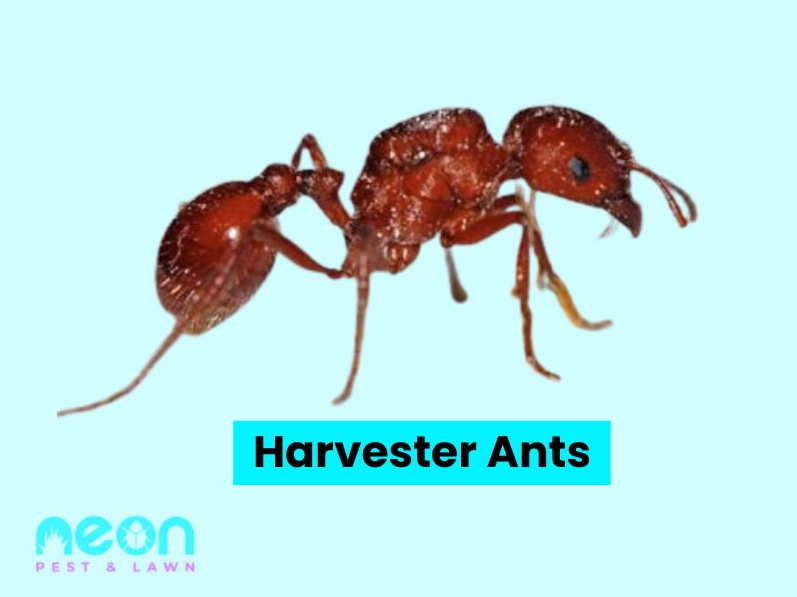
Appearance: Harvester ants have a reddish-brown to dark red body. Workers measure about 1/4 to 1/2 inch long (6 to 12 mm). They are large, robust ants with a squarish head. Some harvester ant species have a beard-like tuft of hairs under their head called a psammophore. This helps them carry sand and soil. They have two nodes at the waist and a visible stinger.
Where Harvester Ants Are Found: Harvester ants are most common in the western and southwestern United States. They are widespread in Texas, Arizona, New Mexico, Utah, and California. They prefer dry, open grasslands, deserts, and sparse shrublands. They clear large circular bare patches of ground around their nest entrances. These bare patches are easy to spot from a distance.
Habitat: Harvester ants build deep, complex underground nests. Their tunnels can reach 10 to 15 feet underground. They create large storage chambers for seeds deep in the nest. The nest entrance sits in the center of a bare, circular clearing that the ants maintain actively. A mature harvester ant colony holds 10,000 to 100,000 workers with one queen. Colonies can live for 15 to 20 years or longer.
Lifecycle: Harvester ant queens live for up to 30 years, making them one of the longest-living insects on Earth. Queens lay eggs throughout the warm season. The egg-to-adult cycle takes about 30 to 60 days, depending on temperature. New colonies form when winged swarmers mate during summer rains. After mating, queens start new nests alone underground. Colony growth is slow and steady over many years.
Threat: Harvester ants deliver a very painful sting. Their sting is ranked among the most painful of any ant species in the USA. The pain lasts for several hours and can cause swelling and redness. People with allergies can experience serious allergic reactions. They are not a household pest but are a danger in yards, parks, and recreational areas in the Southwest. Keep children and pets away from harvester ant mounds. Contact a pest professional for safe colony removal.
Crazy Ants
Crazy ants are an invasive ant species rapidly spreading across the southeastern USA. They are also called Raspberry crazy ants after the exterminator who first identified them in Texas. Their erratic, fast movement gives them the “crazy” name.
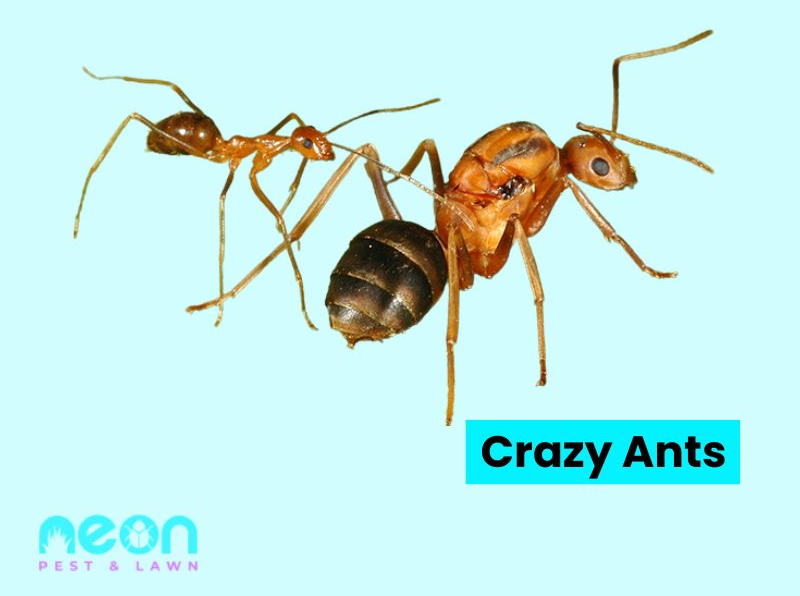
Appearance: Crazy ants have a dark reddish-brown to black body. Workers measure about 1/8 inch long (3.2 mm). Their most notable features are their extremely long antennae and legs relative to their body size. Their body is covered in coarse, reddish hairs. They have 12-segmented antennae with no club at the tip. They have one node at the waist and no stinger.
Where Crazy Ants Are Found: Crazy ants are spreading across Texas, Florida, Mississippi, and Louisiana. They first appeared in Harris County, Texas, around 2002. They are now found in over 27 Texas counties and parts of Florida. They thrive in warm, humid coastal environments. They infest both urban and suburban areas aggressively. Their spread is increasing rapidly each year.
Habitat: Crazy ants are extremely habitat flexible. They nest in soil, leaf litter, rotting wood, under objects, and inside wall voids. They form massive supercolonies with millions of workers. Unlike most ant species, they do not defend a fixed territory. Multiple colonies freely merge. They are notorious for invading and short-circuiting electrical equipment in large numbers.
Lifecycle: Crazy ant colonies can have multiple queens per colony. Queens lay eggs continuously in warm conditions. The egg-to-adult cycle takes about 36 to 43 days. Colonies grow extremely fast and spread by budding, not swarming. A single property can go from a few ants to millions within one season. Their rapid growth rate makes them one of the most challenging invasive ant species to control in the USA.
Threat: Crazy ants are a growing ecological and structural threat in the USA. They displace native ant species, including fire ants. They destroy small animal and bird populations in areas they invade. They cause millions of dollars in damage to electrical systems each year. Utility companies, airports, and industrial facilities face serious disruptions. Standard ant control products are largely ineffective against them. Contact a professional pest management company immediately if you spot Crazy ants on your property.
Ghost Ants
Ghost ants get their name from their nearly invisible pale legs and abdomen. Their dark head and thorax make them look like a floating dark head with no body. This ghostly appearance makes them easy to identify when you can spot them at all.
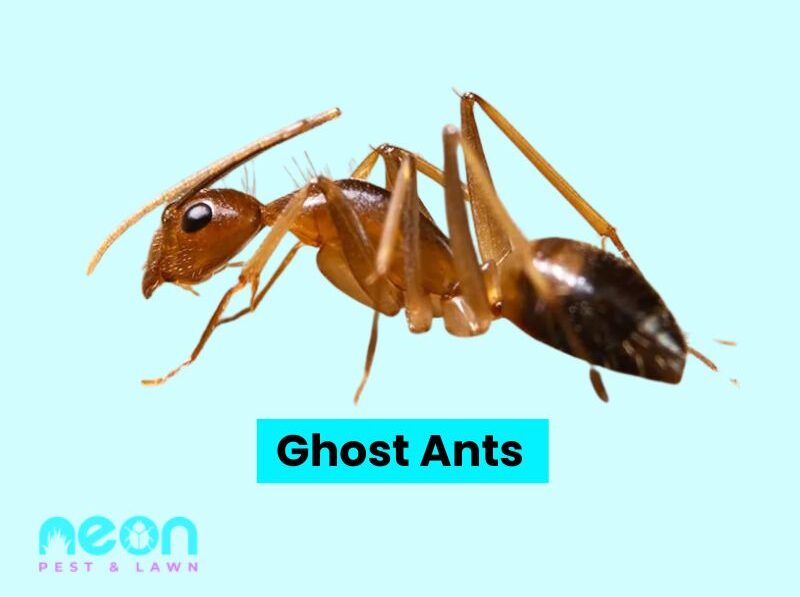
Appearance: Ghost ants have a two-toned body. Their head and thorax are dark brown to black. Their legs and abdomen are pale white or translucent. Workers measure about 1/16 inch long (1.3 to 1.5 mm). They have one node at the waist and no stinger. Their tiny size and pale lower bodies make them extremely difficult to see on light-colored surfaces. When crushed, they release a smell similar to rotten coconut, like odorous house ants.
Where Ghost Ants Are Found: Ghost ants are most common in Florida and Hawaii. In Florida, they are one of the most frequently reported indoor ant pests. They also appear in Texas, Georgia, and other warm southern states. In colder states, they survive only in heated buildings and greenhouses. They are a tropical and subtropical species originally from Africa and Asia.
Habitat: Ghost ants nest in both outdoor and indoor environments. Outdoors, they nest under rocks, in soil, inside plant stems, and in loose tree bark. Indoors, they nest inside wall voids, between cabinets, behind baseboards, and in potted plants. They need moisture to survive and stay close to water sources. A ghost ant colony holds a few hundred to several thousand workers with multiple queens.
Lifecycle: Ghost ant colonies have multiple queens per colony. Queens lay eggs continuously in warm, heated environments. The egg-to-adult development takes about 60 to 75 days. New colonies form through budding, not swarming. Worker ghost ants live for only a few months. Queens live longer and continuously produce new workers. Colonies spread rapidly through buildings by moving through wall voids and utility pipes.
Threat: Ghost ants do not bite or sting humans effectively. Their primary threat is food contamination in kitchens and pantries. They are strongly attracted to sweet foods, grease, and water sources. Their multiple-queen structure makes them very resistant to standard ant control products. Like pharaoh ants, using repellent sprays causes colony budding and spreading. Only targeted ant bait programs work effectively against ghost ants. Call a pest professional for accurate identification and treatment.
Big-Headed Ants
Big-headed ants get their name from the disproportionately large head of their soldier caste. They are an invasive ant species spreading rapidly across the USA. Pest experts consider them a significant threat to both structure and ecology.
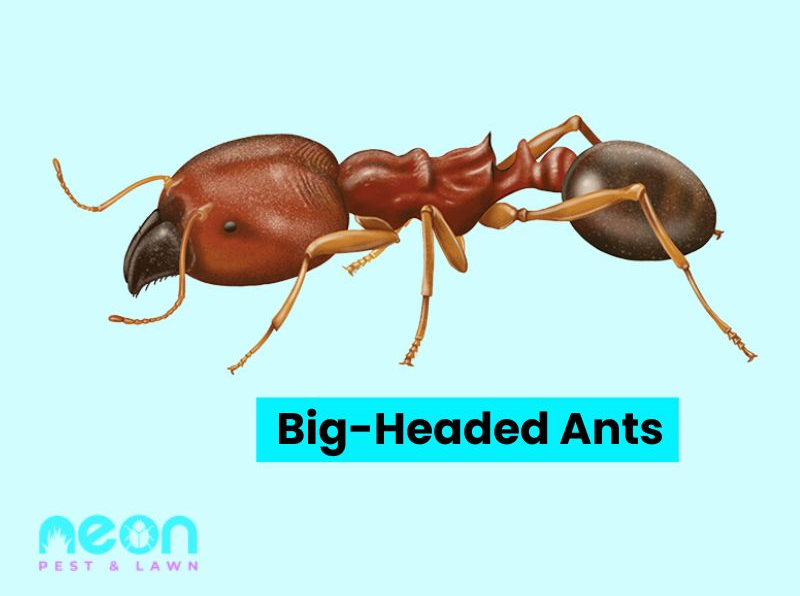
Appearance: Big-headed ants have two distinct worker sizes in every colony. Minor workers measure about 1/16 inch long (2 mm) with a normal-sized head. Major workers (soldiers) measure about 1/8 inch long (3.5 mm) with a very large, square-shaped head. Both castes have a reddish-brown body. They have two nodes at the waist. Their large head and mandibles help soldiers crack open seeds and defend the colony.
Where Big-Headed Ants Are Found: Big-headed ants are most common in Florida, Hawaii, California, and the southeastern USA. They are spreading into new states as temperatures rise. They are originally from Africa. They thrive in warm, urban, and suburban neighborhoods. They are a major nuisance in lawns, gardens, and along building foundations in warm climates.
Habitat: Big-headed ants build nests in soil, under stones, under mulch, and along building foundations. They push up dirt and soil particles near their nest entrances, creating messy mounds. Indoors, they enter through foundation cracks and utility gaps. They occasionally nest inside wall voids near moisture. Colonies can be very large, with multiple queens and thousands to hundreds of thousands of workers.
Lifecycle: Big-headed ant queens lay eggs throughout the warm season. The egg-to-adult cycle takes about 30 to 60 days, depending on temperature. Colonies have multiple queens and reproduce through budding. A single colony can spread across several neighboring yards. Winged swarmers appear in the summer months to start new colonies. Colony size grows steadily and can become very large in warm climates.
Threat: Big-headed ants are not dangerous to humans. Their bite is minor and their sting is ineffective. Their biggest threat is ecological and structural. They displace native ant and insect species rapidly in areas they invade. Indoors, they contaminate food in kitchens and pantries. They also undermine pavement and building foundations by moving large amounts of soil. Their multiple-queen budding behavior makes them very difficult to eliminate with store-bought products. Professional treatment with targeted baiting programs is the most effective control method.
How to Identify Different Ant Species
Identifying the type of ant you have saves you time, money, and frustration. Different ant species need different treatments. Follow these simple steps to identify your ant correctly.
- Step 1- Look at the Body Size
- Step 2- Check the Body Color
- Step 3- Count the Nodes at the Waist
- Step 4- Observe Their Behavior and Movement
- Step 5- Note the Smell
- Step 6- Find the Nest Location
Do You Need Professional Ant Control?
Not every ant sighting needs a professional. But some ant infestations go far beyond what store-bought sprays can handle. Knowing when to call an expert saves your home from serious damage and protects your family’s health.
A few ants near your door is normal. But a full ant infestation inside your walls, floors, or foundation is a different story entirely. The wrong treatment can make certain species, like pharaoh ants and crazy ants, spread faster. Always identify your ant species before treating.
When to Call an Expert for Ant Infestations
- Your wooden walls, floors, or beams show small holes or tunnels. Carpenter ants or moisture ants are actively destroying your home’s structure from the inside.
- You or a family member got stung and had a severe allergic reaction. Fire ants or harvester ants near your home pose a serious and immediate health danger.
- Ants keep reappearing after repeated store-bought treatments. Pharaoh ants, crazy ants, and Argentine ants build supercolonies that standard products simply cannot eliminate.
- You spot ant trails running through your kitchen, pantry, or food storage areas. Pharaoh ants and ghost ants carry dangerous bacteria like Salmonella and Streptococcus that contaminate your food and surfaces.
- Your electrical equipment, HVAC unit, or wiring shows unexplained damage or failures. Longhorn crazy ants and fire ants invade electrical systems and cause thousands of dollars in damage if left untreated.
Don’t wait until the damage gets worse. Our licensed pest control experts locate the colony, identify the species, and eliminate the infestation at its source. Get professional ant control today.
Final Thoughts
Understanding the different types of ants found across the USA helps you act smarter and faster. Whether you are dealing with common household ant species like odorous house ants and pavement ants or more dangerous types like fire ants and carpenter ants, correct identification is everything. Each ant species behaves, nests, and responds to treatment differently. Use this complete types of ants guide to identify exactly what ant you have, understand its threat level, and choose the right solution to protect your home and family.