
Ant Control in Horry County
Fire ants in the yard, tiny ants in the kitchen. Different problems, different solutions.
Or book a free pest evaluation by a licensed technician.
Ants showing up indoors is almost never about how clean your house is.
In coastal South Carolina it's usually about water. Sandy soil means shallow nests, and when heavy rain floods them the colony moves to the nearest high, dry ground — which is your slab or wall void. That's why ant calls spike in the days after a storm.
The Ants We Deal With Here
Fire ants
The dominant yard problem in Longs, Aynor, Loris, and anywhere with open sun. Mounds appear fast after rain, and they're aggressive when disturbed. Active most of the year here — they slow in genuine cold but rarely stop for long.
Argentine ants
Small, dark, and follow distinct trails. They form massive interconnected colonies with multiple queens, which is why they're so hard to knock out and why spraying them tends to backfire.
Ghost ants
Very small with pale, almost translucent legs and abdomen. Common in kitchens and bathrooms, drawn to moisture and sweets. Like Argentine ants, they bud readily when sprayed.
Carpenter ants
Large and black, often found where wood has stayed damp. They excavate galleries rather than eating wood, so they're less destructive than termites — but finding them usually means you have a moisture issue.
Pavement ants
Nest under driveways, sidewalks, and slabs, entering through expansion joints and cracks.
Why the can of spray under your sink makes it worse
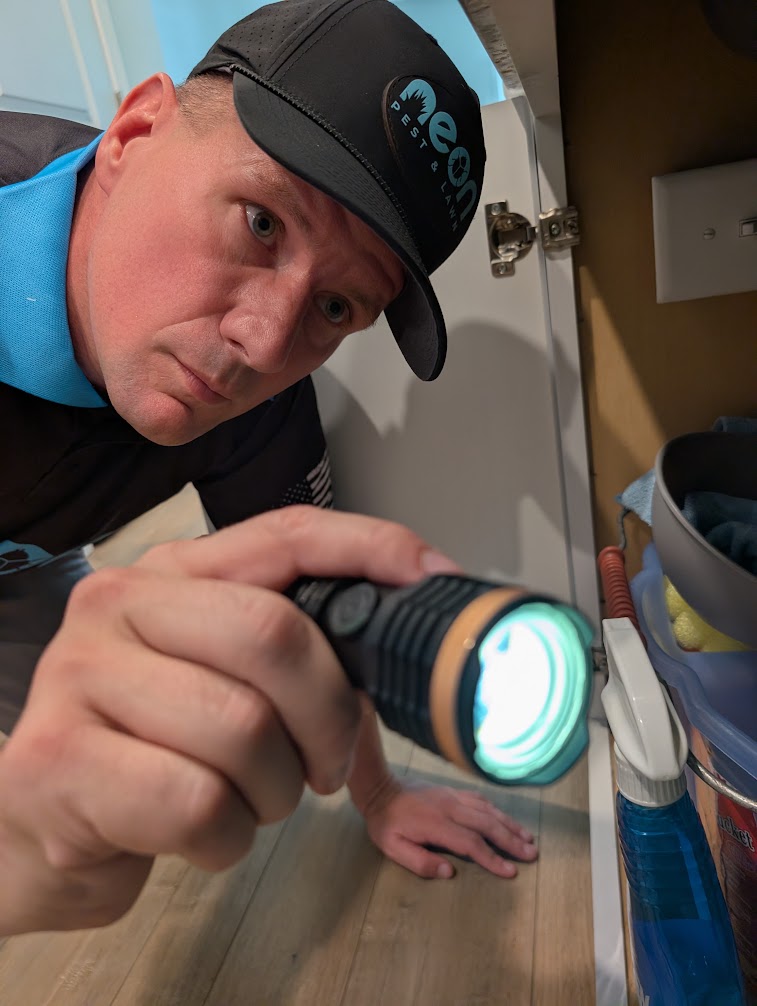
Most retail ant sprays are repellent. With species like Argentine and ghost ants, that triggers budding — the colony splits and satellites form elsewhere in the structure. You kill the trail you can see and create three you can't. We use non-repellent products and baits so foragers carry material back to the colony instead of scattering.
Fire Ants Need a Program, Not a Mound Treatment
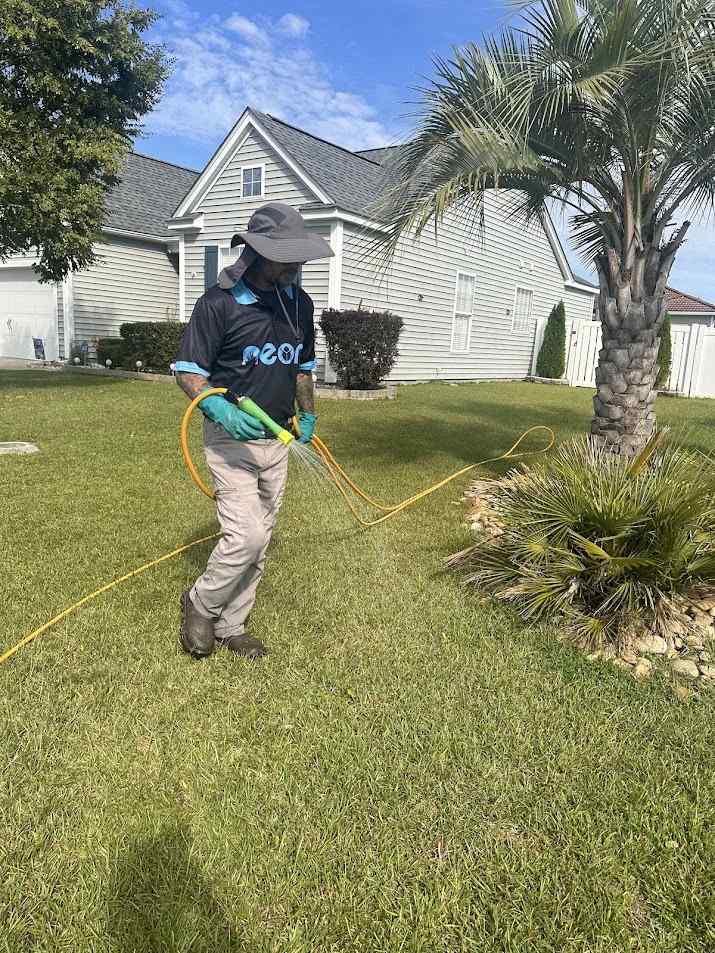
Pouring something on a mound typically relocates the colony a few feet. Actual control means treating the whole yard so new colonies can't establish, then keeping it maintained. That's why fire ant control is a lawn-wide program rather than a one-time visit — included in our Premium COMPLETE lawn program and our Bi-Monthly Pest package, and available as an add-on to any other lawn plan.
It matters for more than comfort. Fire ant stings are a genuine medical concern for people with allergies, and for pets and small children playing in the yard.
What Helps Between Services
- Fix the water problem — leaks, condensation, and damp areas draw ants indoors
- Keep mulch pulled back a few inches from the foundation
- Trim branches and shrubs touching the house; they're bridges
- Seal gaps around pipes, utility lines, and door sweeps
- Wipe trails with soapy water rather than spraying — it removes the pheromone without scattering the colony
Common Questions
Why so many ants right after rain?
Flooded nests. Sandy soil doesn't hold shallow colonies well when saturated, so they move to dry ground — your foundation, slab, or wall voids.
I cleaned everything and they're still coming.
Common, and it's not a cleanliness failure. Ants also come in for water and shelter, not just food. Kitchens and bathrooms attract them because of moisture as much as crumbs.
Will one treatment solve it?
Sometimes for a single indoor trail. For fire ants or a large Argentine colony, no — those need ongoing treatment. If activity continues after a service, call us and we come back at no charge.