
Fall Pest-Proofing Checklist
Work you do in September instead of trapping you do in January.
A house mouse fits through a gap about the width of a pencil. A rat needs one about the size of a quarter.
That's the whole problem in one sentence. Bait manages a population; sealing gaps prevents one. When nights start cooling in October — and out toward Loris and Aynor when fields get harvested — whatever is living outside starts looking for somewhere warm. September is when you close the door.
Start Outside: Walk the Foundation
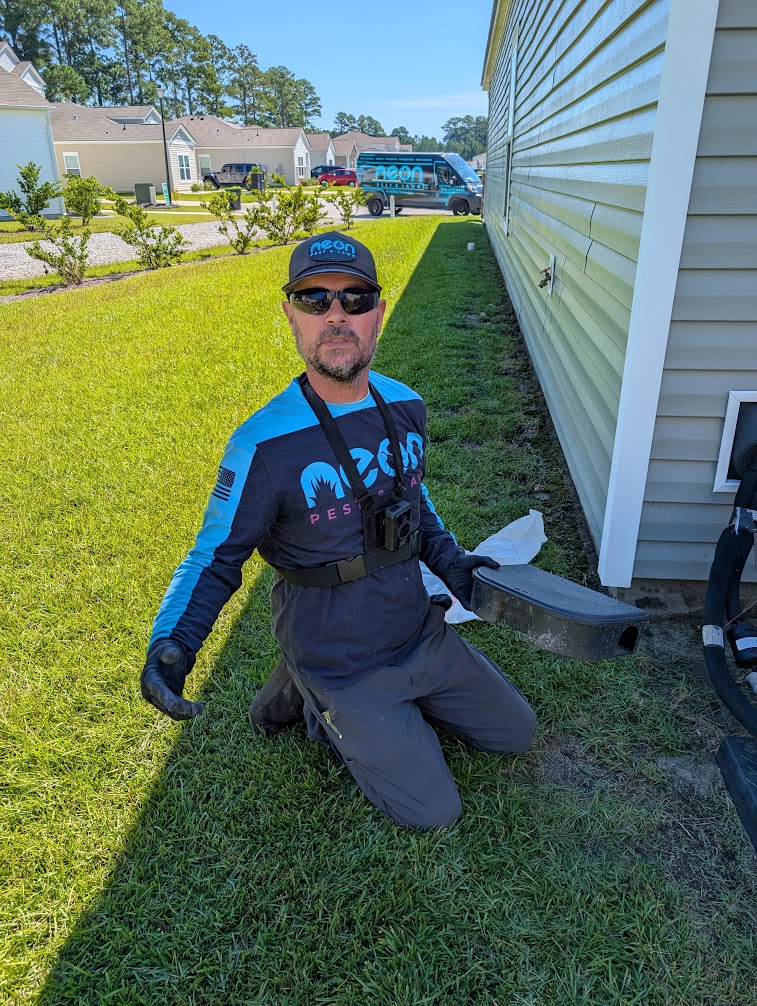
- Pipe and utility penetrations. Water lines, gas lines, electrical, cable, AC lines. These almost always have gaps, and they're the most common entry point we find.
- Foundation cracks and expansion joints.
- Crawlspace vents. Check every screen for tears or missing sections.
- Dryer and exhaust vents. Damper flaps get stuck open and become an open door.
- Where siding meets foundation — gaps here are easy to miss and easy to seal.
Foam alone doesn't work
Rodents chew straight through expanding foam. Pack the gap with copper mesh or steel wool first, then seal over it. For larger openings and vents, use hardware cloth. The metal is what stops them; the sealant just finishes it.
The Garage
Garages are the single most common entry route into homes here, and the bottom corners of the garage door are the reason.
- Check the rubber bottom seal for gaps, cracks, or hardening
- Look at the corners specifically — even a closed door usually has small triangular gaps there
- Check side weather stripping
- Seal the gap where the garage wall meets the slab
- Move pet food and birdseed into sealed containers, not bags
Doors and Windows
- Door sweeps. If you can see daylight under a door, insects and mice can walk under it. This is a cheap fix with a big effect.
- Weather stripping around frames
- Window screens with tears
- Caulk gaps around window and door trim
Up High
Roof rats climb. Don't only look at ground level.
- Soffit and fascia gaps
- Roof and ridge vents — screens intact?
- Where the roofline meets a wall on split-level sections
- Chimney cap present and secure
- Overhanging branches — trim back anything within about six feet of the roof; it's a bridge
The Yard
- Move woodpiles off the ground and away from the house
- Clear leaf litter and debris from against the foundation
- Trim shrubs so they aren't touching siding
- Pull mulch back a few inches from the foundation
- Clean gutters — standing water and debris draw insects
- Fill abandoned rodent burrows
- Secure trash and compost
What to Do Inside
- Store pantry goods in sealed containers
- Reduce clutter in garages, attics, and closets — it's harborage
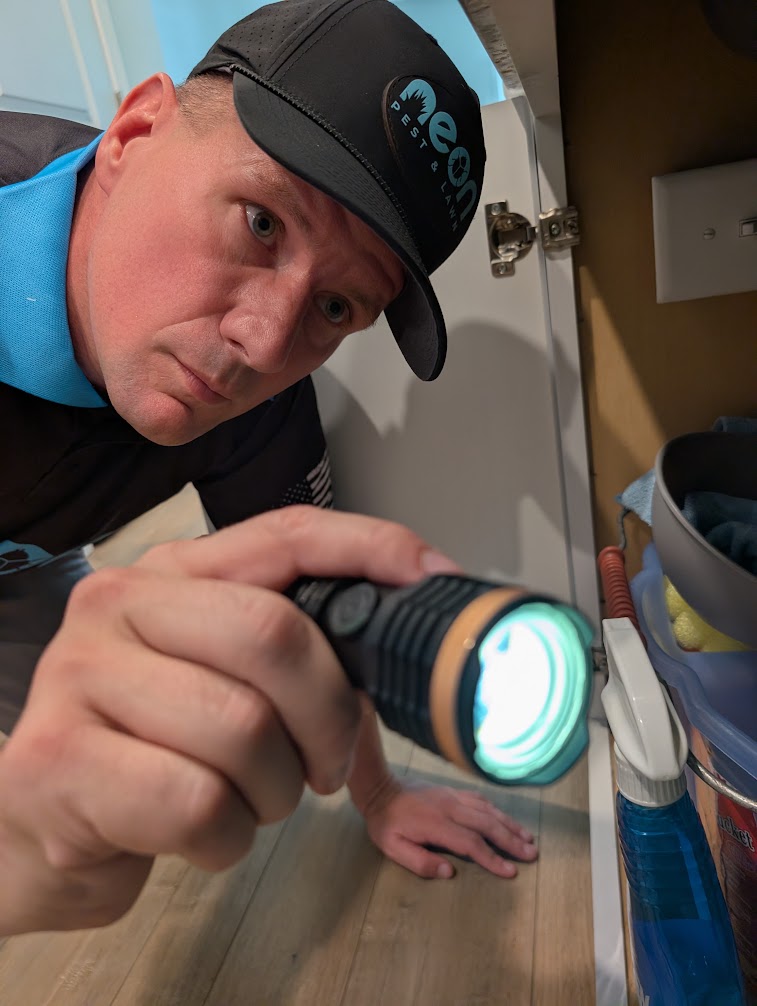
- Fix leaks under sinks and around water heaters
- Run a dehumidifier in crawlspaces and closed storage
- Check behind and under appliances where crumbs and moisture collect
Why September Specifically
Timing is the entire point. Rodents that get in during October settle, breed, and by January you have an established population inside your walls that's far harder and more expensive to remove.
Exclusion in September is a few hours of work and some hardware. Removal in January is a service problem.
Common Questions
Can you do the sealing work for us?
We identify entry points during service and tell you exactly where they are. Extensive exclusion work is generally a handyman or contractor job — we'll be straight with you about what's DIY and what isn't.
Is bait enough on its own?
Bait manages a population. It doesn't stop new ones entering. Stations plus sealed entry points is what actually ends the yearly cycle.
We've never had rodents. Do we need this?
Conditions change — a field gets harvested, a lot gets cleared, construction starts nearby. Most first-time rodent calls come from homeowners who'd never had a problem before.