
Flea & Tick Control in Horry County
Mild winters mean neither one really goes away here. Year-round pressure needs a year-round approach.
Or book a free pest evaluation by a licensed technician.
If you treated for fleas and they came back two weeks later, the treatment probably worked. The problem is what it couldn't reach.
Adult fleas on your pet are a small fraction of the total population. The rest — eggs, larvae, and pupae — are down in carpet fibers, bedding, furniture seams, and soil. Pupae are the difficult stage: they're protected inside a cocoon, resistant to treatment, and can sit dormant for weeks waiting for vibration and warmth to signal a host.
That's the "it didn't work" experience. New adults emerging from pupae that were never vulnerable in the first place.
Vacuuming is genuinely part of the treatment
Vacuuming does two things: it removes eggs and larvae, and the vibration triggers pupae to emerge — into a treated environment where they're vulnerable. Vacuum daily for a couple of weeks after service, especially where pets rest, and empty it outside each time. It makes a measurable difference.
Breaking the Flea Cycle
All three at once, or it doesn't hold:
- The pet — veterinary prevention, consistently. This is the piece we can't do for you and the one that matters most.
- The home — treatment plus vacuuming, washing pet bedding in hot water.
- The yard — treating shaded resting areas where pets lie down, since that's where eggs drop.
Treat one and skip another and you're re-seeding the problem continuously.
Ticks Live at the Edges
Ticks don't want open sunny lawn — it's too dry and too hot. They concentrate in humid transition zones:
- Where lawn meets woods or brush
- Tall grass and unmowed areas
- Leaf litter and mulch under shade
- Dense ground cover and ivy
- Around woodpiles and stacked stone
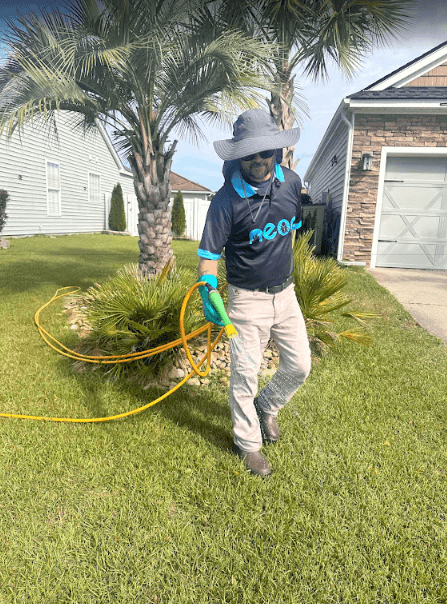
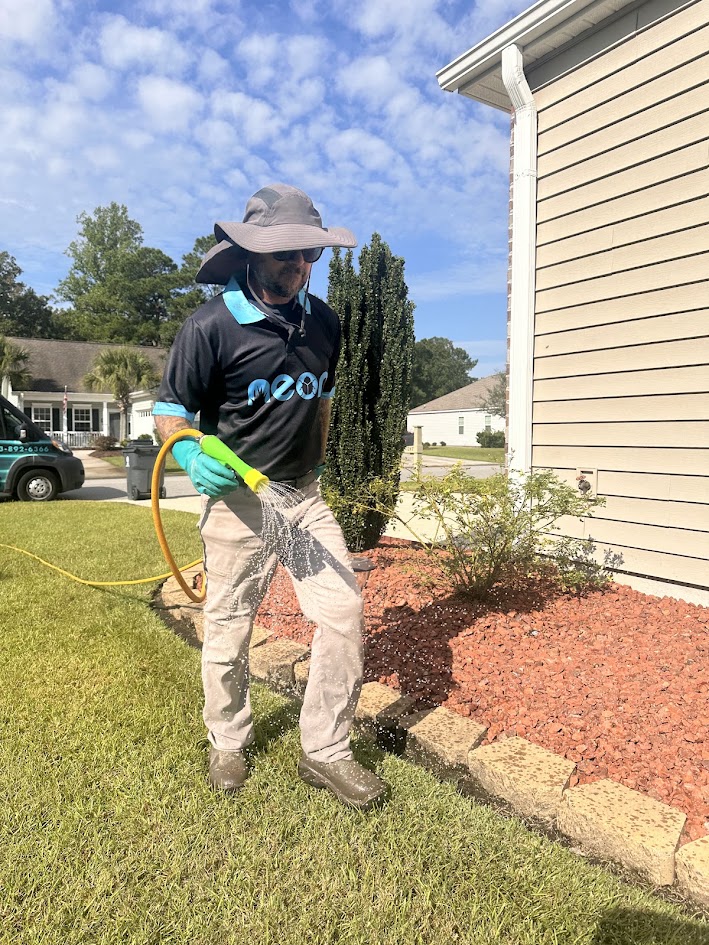
That matters for treatment. Blanketing the open lawn accomplishes little; the perimeter and shaded edges are where the work is.
Ticks in South Carolina
- Lone star tick — very common here; the female has a distinct white dot on her back. Aggressive biter.
- American dog tick — common in grassy areas and along paths.
- Blacklegged (deer) tick — smaller, associated with wooded areas, and active on warm winter days.
Yard Changes That Help
- Keep grass mowed; short turf is poor tick habitat
- Clear leaf litter, especially along the wood line
- Create a defined border — mulch or gravel — between lawn and woods
- Move woodpiles off the ground and into sun
- Discourage deer and rodents, which carry ticks in
- Trim back overgrown shrubs and ground cover near where children and pets play
Common Questions
My pet is on prevention. Why do I still have fleas?
Prevention protects the pet, not the house. Fleas already in carpet and soil keep emerging and can still bite people. The environment needs treating alongside the pet.
How should I remove a tick?
Fine-tipped tweezers, grasp as close to the skin as possible, pull steadily upward without twisting. Clean the area afterward. Don't use heat or petroleum jelly. If you develop a rash or feel unwell in the following weeks, see a doctor and mention the bite.
Is one yard treatment enough?
Rarely. Both pests have life stages that survive a single application, and reinfestation from wildlife is constant. Recurring service through the active season is what holds it.
We don't have pets. Why do we have fleas?
Wildlife. Squirrels, raccoons, opossums, and feral cats under decks or in crawlspaces bring fleas onto the property. It's common after an animal nests under a house and then leaves.