Mosquito Control in North Myrtle Beach, SC
The Cherry Grove marsh is a saltmarsh mosquito hotspot. We can't drain it — but we can make your yard usable again.
Or book a free evaluation and we'll find your breeding sources.
We'll tell you what most companies won't: no one can make Cherry Grove mosquito-free. The marsh is the source, it refills with every tide, and it isn't on your property. What we can do is take your yard back.
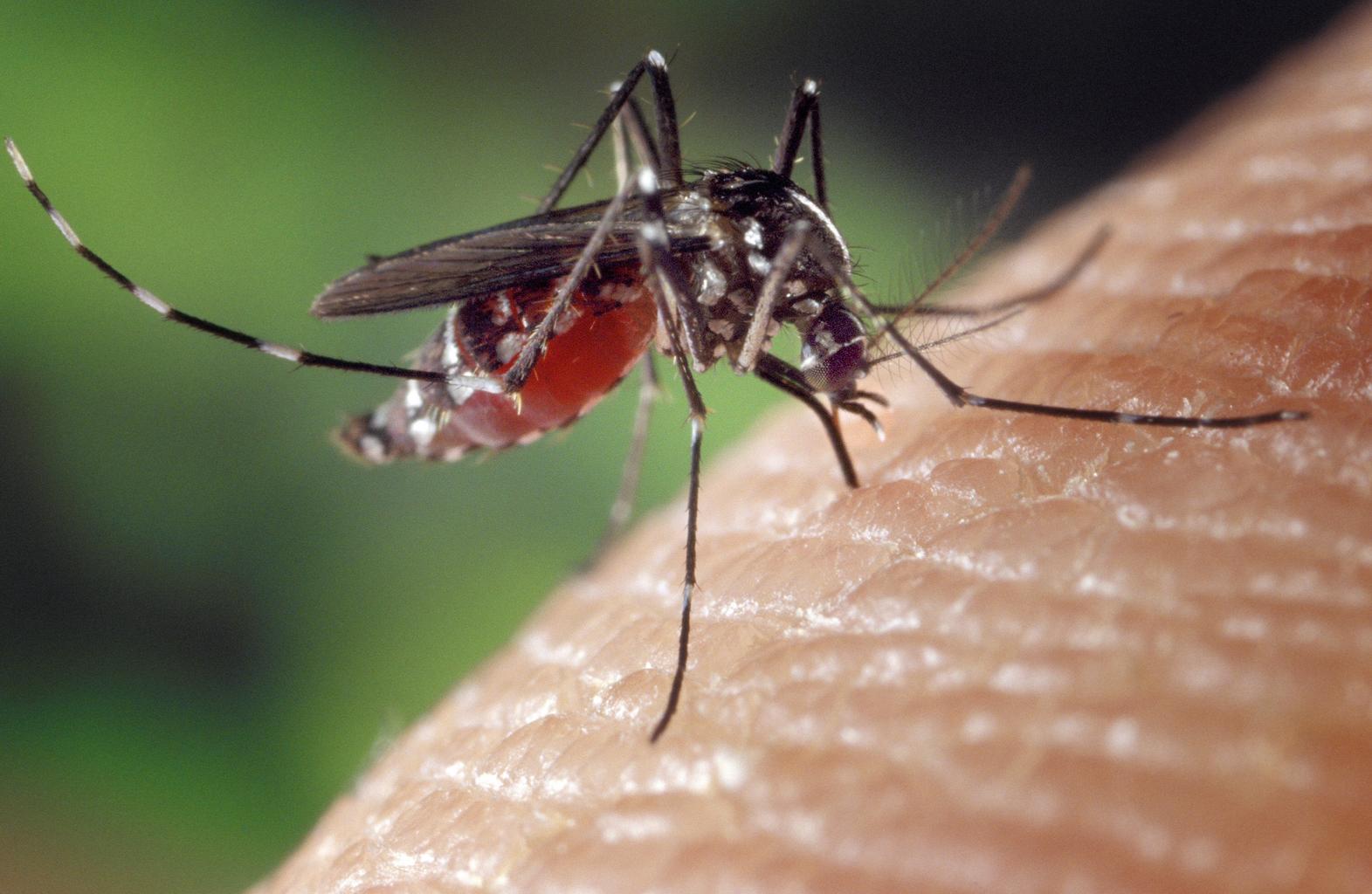
North Myrtle Beach has one of the heaviest mosquito zones we work, and it's driven by the big tidal saltmarsh behind Cherry Grove. Saltmarsh mosquitoes breed in pools that recharge with every high tide, so the habitat is effectively endless — and they're strong fliers, carrying well beyond the marsh into the surrounding streets to feed. Any company that promises to eliminate mosquitoes here is selling you a fantasy. Our approach is honest and it works: kill the adults resting in your yard and stop what's breeding on your own lot, so the porch and patio become usable through the season.
The Cherry Grove marsh is the whole story
Backing to or living near the Cherry Grove marsh means you're dealing with saltmarsh species that breed in tidal pools. Those pools refill with every tide, so the breeding source is effectively infinite and it isn't yours to treat. Our program focuses on making your yard inhospitable — killing the adults that fly in and stopping the container-breeders on your lot — because that's the part we can actually control.
Mosquito Season on the Beach
- March–May — activity begins as temperatures climb; spring rain and tides fill breeding sites.
- June–September — peak. Heat, afternoon thunderstorms and tidal flooding stack up.
- October–November — pressure tapers but hangs on longer near the Cherry Grove marsh than it does inland.
- Winter — mostly quiet, though warm spells can bring short resurgences.
Where They're Breeding on Your Property
The marsh source is out of reach, but the container-breeders on your own lot are not — and they need only a small amount of standing water for about a week. Common sources people miss, and on tight beach lots they add up fast:
- Clogged gutters — the single most overlooked source
- Plant saucers, potted-plant trays and bird baths
- Tarps, boat covers, kayak wells and grill covers holding pockets of water
- Irrigation valve boxes and corrugated downspout extensions
- Outdoor-shower drains and low spots that stay wet after rain or a tide event
- Old tires, buckets, coolers and beach toys
Your technician walks the property and points these out. Fixing them is usually free and does more than any treatment.
The Season, in Real Terms
Our mosquito program runs 7 monthly treatments, starting in April or early May and continuing through October or early November — the stretch when mosquitoes are actually active on this coast. The cost is spread evenly over 12 monthly payments, so your bill stays level even though the visits are seasonal. Every visit is the same two-step process.
How We Actually Treat It — A Two-Step Process
Killing today's adults does nothing about tomorrow's. So we treat both ends of the mosquito's life cycle.
1. Fogging — the adults
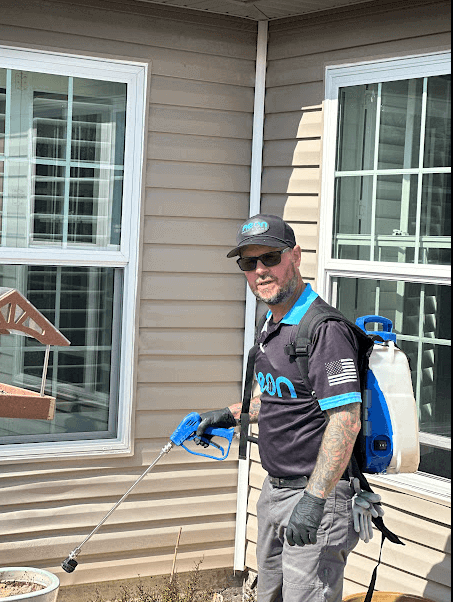
Using a backpack mister, your technician fogs the trees, shrubs and shaded harborage where mosquitoes rest during the day with OneGuard. This knocks down the adults on your property and leaves residual on the foliage where they land — it's what buys back your evenings on the porch this week.
Heavy rain and tide events shorten it. That's not a product failure — it's exactly why treatment is recurring through the season, and why it matters even more this close to a marsh that keeps sending new mosquitoes over.
2. Altosid granules — the larvae
Applied to the standing-water sources you can't eliminate — bird baths, downspouts, outdoor-shower drains, low spots that hold tide water — to stop breeding before it starts. The active ingredient is (S)-methoprene, an insect growth regulator.
It doesn't kill larvae outright. Larvae develop normally right up to the pupal stage — then die before emerging as biting adults. The mosquito never completes its life cycle.
- Provides up to about 30 days of control in standing water
- Target-specific — does not affect fish, waterfowl, mammals or beneficial predatory insects, which matters right beside the marsh
- Used in the places you can't drain: bird baths, downspouts, drainage areas, low spots, catch basins
This is the part that compounds
Fogging alone means killing adults that keep getting replaced — and next to Cherry Grove, replacements keep flying in off the marsh. Add the granules and fewer adults get produced on your lot in the first place. Run both through 7 monthly visits and the population you're fighting in August is smaller than it would have been. It won't be zero. It will be a yard you can sit in.
Common Questions
Will one treatment fix it?
No, and anyone promising that near the marsh isn't being straight with you. Adults are continually emerging from the Cherry Grove marsh and moving in. Control means recurring treatment through the active season, paired with removing what you can on your own lot.
Why am I getting bitten at dusk specifically?
Many species are crepuscular — most active at dawn and dusk when humidity rises and wind drops. No-see-ums follow a similar pattern and are common along the beach and marsh here.
Do mosquito treatments hurt pollinators?
Application matters. Treatments are directed at resting areas rather than blooming plants, and timing avoids peak pollinator activity where possible. Your technician applies according to the product label, which includes pollinator protection requirements.
Do you use mosquito traps?
No. Traps catch a small fraction of the population and do nothing about the marsh or the breeding habitat on the rest of your lot. Our two-step program of fogging and larvicide treats the adults you have now and prevents the next generation, which does more than any trap.
Communities we serve in North Myrtle Beach: Cherry Grove, Robbers Roost, Tidewater, and the older beach cottages and newer golf-adjacent neighborhoods across the strand.
Nearby on the water? See mosquito control in Little River, or the full pest control in North Myrtle Beach plan.
Get Your North Myrtle Beach Evenings Back
We'll find the sources and treat the resting areas.
Click for Instant Pricing →