
Rodent Control in Horry County
Fall is when they move in. Getting ahead of it is far easier than clearing them out in January.
Or book a free pest evaluation by a licensed technician.
Rodent problems here are seasonal and predictable, which means they're preventable.
When nighttime temperatures start dropping in October, mice and rats look for somewhere warm with food and water. Out toward Loris and Aynor it's worse, because harvest activity pushes them out of fields at exactly the same time. By January a small problem has become an established population.
Signs You Have Them
- Droppings along walls, in cabinets, drawers, or the pantry — usually the first thing noticed
- Gnaw marks on food packaging, cardboard, or wiring
- Sounds at night — scratching or scurrying in walls, ceilings, or attic
- Rub marks — greasy dark smudges along baseboards and travel routes
- Nesting material — shredded paper, fabric, or insulation in corners and storage
- Pet behavior — dogs or cats fixating on a wall or appliance
A mouse fits through a dime-sized gap
About a quarter inch. Rats need roughly a quarter-sized opening. That's why exclusion — actually sealing the entry points — matters more than how much bait is on the property. Bait without exclusion means you're managing a population instead of ending one.
Where They Get In
- Gaps around pipes, cables, and utility penetrations
- Garage door corners and worn weather seal
- Crawlspace vents with damaged screens
- Roofline gaps, soffit vents, and where the roof meets a wall
- Dryer vents and unscreened exhaust
- Foundation cracks and expansion joints
- Overhanging branches giving roof access
What Makes a Property Attractive
- Pet food or birdseed stored in bags rather than sealed containers
- Outbuildings, sheds, and barns with clutter and cover
- Woodpiles and stored materials against the structure
- Overgrown vegetation and dense ground cover at the foundation
- Trash and compost near the house
- Fruit or nuts dropping from trees and not being cleared

How We Handle It
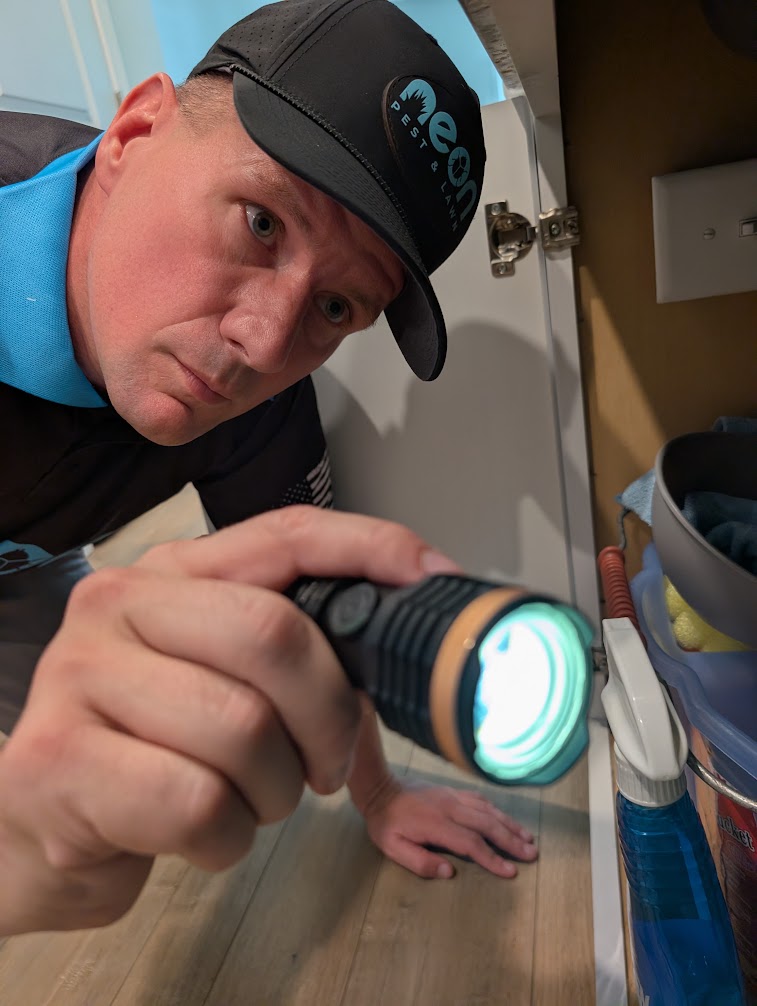
- Inspection — identify the species, the entry points, and what's drawing them
- Tamper-resistant stations — secured and placed out of reach of children and pets
- Monitoring — stations checked and serviced on your regular visits
- Exclusion guidance — we show you the gaps that need sealing
- Sanitation recommendations — the storage and yard changes that make the property less appealing
Rodent station monitoring is included in our bi-monthly plan, which is what we usually recommend for rural properties and homes near fields or woods.
Common Questions
Why now? I've never had this problem.
Usually a change outside the house — a field harvested, a nearby property cleared, construction, or simply a colder-than-usual snap. Rodents relocate when their habitat changes, and your house is the nearest option.
Will they die in my walls and smell?
It can happen with any control method, including traps. Placement matters, which is part of why station location is deliberate rather than random. Sealing entry points reduces how deep into the structure they get in the first place.
Can I just use traps from the hardware store?
Traps can work for one or two mice. They don't address entry points or the conditions attracting them, so the pattern usually repeats next fall. If you're catching several, you're past the DIY stage.
Do I need this year-round?
Pressure is highest in fall and winter, but stations stay in place year-round on an ongoing plan so activity gets caught early rather than after they've established.